


|
|

|
|
|
|

|
|


|

The profound long-suspected truth about Christianity became an indisputable fact when Dead Sea Scroll expert and biblical scholar A. Powell Davies expressed the immortal words when he said: “Biblical scholars were not disturbed by what they found in the Dead Sea Scrolls because they had known all along that the origin of Christianity was not what was commonly supposed to have been” (quoted by Millar Burrows in More Light on the Dead Sea Scrolls). Worse yet, Edmund Wilson, an expert who worked on the Dead Sea Scrolls further raised the question as to what difference it makes if “Jesus... had been trained in the discipline and imbued with the thought of a certain Jewish sect, and that he had learned from it the role that he afterwards lived...” (The Scrolls From The Dead Sea). To the uninformed and unknowing believer, it made all the difference in the world! And when Prof. John Allegro was quoted as saying that what has been revealed in the discovery of the Dead Sea Scrolls is a great amount of overwhelming evidence that “...may upset a great many basic teachings of the Christian Church. This in turn would greatly upset many Christian Theologians and believers. The heart of the matter is, in fact, the source and originality of Christian doctrine” (August 1966 issue of Harpers Magazine); what he was in fact stating is that, everything that we now know about Christian beginnings demonstrate that the Essene/Ebionites were not the heretics, as they were falsely portrayed by the later Gentile church, but were in fact the body of genuine believers that held fast to the authentic teachings of Yeshua/Jesus and the New Covenant.
In one of the latest assaults upon the Church with the sword of historical facts (The Jesus Papers : Exposing the Greatest Cover-Up in History), author Michael Baigent poses the question: "What if everything you think you know about Jesus is wrong?" And the basis of his book is in the description: "As a religious historian and a leading expert in the field of arcane knowledge, Baigent has unequaled access to hidden archives, secret societies, Masonic records, and the private collections of antiquities traders and their moneyed clients." But perhaps even more revealing is presented in one of the author's previous books entitled The Dead Sea Scroll Deception, where a Publishers Review states of the book: "For the lay reader, this crystalline, well-documented work offers substantive evidence that for more than 40 years a small coterie of Catholic scholars established a stranglehold on access to the Dead Sea Scrolls, which were discovered in the Qumran caves east of Jerusalem in 1947. Baigent and Leigh ( Holy Blood, Holy Grail ) claim that the elite group had direct links to official Vatican propaganda offices, that at least two among them were outspoken anti-Semites, and that they suppressed material that connects early Christianity to the Qumran community as well as to the zealous defenders of the fortress of Masada. Drawing on the findings of independent Dead Sea Scrolls scholar Robert Eisenman of California State University, the authors advance startling theories that should change the way we view ancient Judaism and nascent Christianity. They argue that the Essenes, Zealots and Nazorenes or early Christians in first-century Palestine weren't different Jewish sects but were, rather, various sobriquets for members of a broad messianic nationalistic movement dedicated to upholding the Law of Moses and determined to violently overthrow the Roman occupiers. The authors also amass evidence that the Habakkuk Commentary and other Dead Sea Scrolls refer to the same events as those recounted in Acts, in Josephus and in the works of early Christian historians; that Paul was sent forth by the hierarchy in Jerusalem for the express purpose of recruiting an army, and by preaching a new religion, he was depoliticizing and emasculating the militant movement; and that Paul might have been a Roman agent or informer. Baigent and Leigh demonstrate the perfidies of clandestine, cliquish scholarship that isn't accountable to the public and make urgent the forthwith publication and translation of all Scrolls material."
As demonstrated on the main Ebionite web site ( http://Ebionite.com ), the present-day doctrines of the Church have very little in common with the original teachings of Yeshua and TheWay. Why? Because they are primarily the concepts of Mithraicism with Jesus installed as the latest incarnation of the pagan sun-god of Constantine (see The Christian Judas). And the facts are beginning to envelop the Church because it falsely believed it could simply ignore one of the first voices of reason -- that of Dead Sea Scroll expert John Allegro, who was at that time a Professor at Manchester University -- who worked extensively on the scrolls, where he was quoted in the August 1966 issue of Harpers Magazine as stating: “The very scholars who should be most capable of working on the documents and interpreting them have displayed a not altogether surprising, but nonetheless curious, reluctance to go to the heart of their matter. The scholars appear to have held back from making discoveries which, there is evidence to believe, may upset a great many basic teachings of the Christian Church. This in turn would greatly upset many Christian Theologians and believers. The heart of the matter is, in fact, the source and originality of Christian doctrine”.
As the Church predicatively attempted to ignore the facts, many other scholars and historians have begun to sound the warning of fraud -- as seen in the review of the book, The Dead Sea Scroll Deception, by the Library Journal: "This emotional account of the events surrounding the discovery and translation of the scrolls attempts to uncover the theological and political efforts by individuals, governments, and religious institutions to keep controversial documents unpublished, ostensibly to preserve orthodox intepretations. The English authors, Baigent and Leigh, base their study on the work of Robert Eisenmen and other religious scholars who maintain that a conspiracy of consensus led to stagnant reinterpretation of old doctrine, rather than true research which would contest preconceived notions with newly discovered evidence. New theories by Eisenmen and others, which challenge the roots of Christianity as well as New Testament doctrine and history, are discussed. Standard works such as John M. Allegro's The Dead Sea Scrolls & the Christian Myth ( LJ 6/1/84), Roland De Vaux's Discoveries in the Judean Desert (Oxford Univ. Pr., 1977), and Geza Vermes's The Dead Sea Scrolls in English (Viking, 1988. rev. ed.), and many others are preferable to this acrid introductory "expose."-- Paula I. Nielson, Loyola Marymount Univ. Lib., Los Angeles"
|
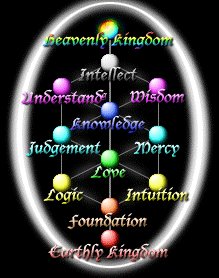
Know Ye not The Meaning of The Symbol of the Tree of Life, and you cannot Know Anything of any real Substance and Depth!
Symbol Of Life and Higher Evolved Consciousness |
|
Know Ye not The Meaning of this Symbol of Life itself, and you are already Dead!
The Grim Reaper The Savior Of Those Who Walk the Broad-Way The Grim Reaper Saves Us From The Perpetual Hell Of Our Own Ignorance
|



 Ebionite.com
Click Icon

If you are in search of Spiritual Truth
Then Join our Nazirene Disciple of TheWay Discussion Group


In the recently discovered Gospel of Thomas it is written: (12) The disciples said to Jesus, "We know that you will depart from us. Who is to be our leader?" Jesus said to them, "Wherever you are, you are to go to James the righteous, for whose sake heaven and earth came into being." So to once again restore the teachings of TheWay which is today known as Christianity, the Lord has sent Jacob/James, the Brother of Yeshua/Jesus, back into the world in order to guide the faithful flock into the Truth, the Light, and the Kingdom within (Luke 17:20-21). It is there that my brother Yeshua/Jesus awaits you.
The above warning with respect to the predicted corruption of Yeshua's teachings is further stated in the first century writings known today as the Clementine Recognitions where it is written: "Our Lord and Prophet, who hath sent us, declared to us that the wicked one, having disputed with Him forty days, and having prevailed nothing against Him, promised that he would send apostles from amongst his subjects, to deceive. Wherefore, above all, remember to shun apostle or teacher or prophet who does not first accurately compare his preaching with that of James, who was called the brother of my Lord, and to whom was entrusted to administer the church of the Hebrews in Jerusalem, — and that even though he come to you with witnesses: lest the wickedness which disputed forty days with the Lord, and prevailed nothing, should afterwards, like lightning falling from heaven upon the earth, send a preacher to your injury, as now he has sent Simon upon us, preaching, under pretense of the truth, in the name of the Lord, and sowing error. Wherefore He who hath sent us, said, ‘Many shall come to me in sheep’s clothing, but inwardly they are ravening wolves. By their fruits ye shall know them.’"
Again it is warned by Clement: "Wherefore observe the greatest caution, that you believe no teacher, unless he bring from Jerusalem the testimonial of James the Lord’s brother, or of whosoever may come after him. For no one, unless he has gone up thither, and there has been approved as a fit and faithful teacher for preaching the word of Christ, — unless, I say, he brings a testimonial thence, is by any means to be received. But let neither prophet nor apostle be looked for by you at this time, besides us. For there is one true Prophet, whose words we twelve apostles preach"
As predicted, the ministers of Satan have succeeded in altering the teachings of my brother Yeshua, and continue to lead many into the abyss of darkness. But have no fear my brothers and sisters, for the teachings of TheWay has been restored so that you might be able to overcome the darkness, and enter the Kingdom of Light within you (Luke 17:20-21).
|
Click Icon to Access |
|
|
The Brother Of Yeshua/Jesus: 2000 years ago I lived as Jacob who many all James, and I was known as the Brother of Yeshua and the first leader of the New Covenant movement of TheWay which is today known as Christianity. I was sent back into the world to restore the teachings of my brother Yeshua to their original spiritual essence, and to guide you in TheWay that is "narrow" so you will be able to open the "strait gate" within you and enter the Kingdom that Yeshua declared must be attained through the second birth. | ||
|
|
The Ebionite HomePage: If you call yourself a Christian, Jew, Messianic believer, Evyonim, Nazarene or Muslim, then it is imperative that you learn of the Ebionites who are True Spiritual Israel -- They are the Poor Ones to the ways and thinking of this world -- The Ebionites were the Israelites of the Nazirene Vow They are/were the Genuine Disciples of Yeshua/Jesus who are in the world and not of it! | ||
|
|
The Nazirene HomePage: The original spiritual teachings of Yeshua/Jesus as practiced by the people of The Way who where known historically as the Essenes, Ebionites, and Nazirenes. The teachings of The Way are Spiritual -- and provide a means to open the "strait gate" into the Kingdom while still physically alive in the body/vessel. | ||
|
|
Divine Manna Of The Kingdom And The Gospel Of Thomas: The 114 sayings of the Gospel of Thomas is the Key to entering the Kingdom Within. To know their meaning, you must first explore and Know Thyself. Thus, the sayings are themselves a catalyst for spiritual transformation. One of the most important statements within the sayings is that "But if you will not know yourselves, you dwell in poverty and it is you who are that poverty... Whoever finds himself is superior to the world". And the finding of self is the primary objective of all scriptures. And when we add to this the statement from the Gospel of Philip that "Those who say that first they shall die and (then) they shall arise are confused. If they do not first receive the resurrection (while) they live,¹ they will not receive anything (when) they die" -- we can begin to understand that the doctrines of the simple faith that Paul called the "milk" of the Gospel of Christ, is truly elementary and only the beginning of entry-level teachings of TheWay. Which means that one of the primary objectives of Jesus' teachings is to become a Disciple of TheWay, and bring about that condition within one's own body-mind Temple, where one can be with the Lord "in the House", and receive the Mysteries of God from the One Teacher of Light. To accomplish this, you must learn to turn the Key of Knowledge -- i.e., the scriptures -- within yourself. The True Meaning of not only the Gospel of Thomas, but also of all genuine scriptures, can only be revealed to those who gain the experiential knowledge through direct revelation of the One Teacher within. Thus, the words: "These are the secret sayings which the living Jesus spoke and which Didymos Judas Thomas wrote down. And he said, Whoever finds the interpretation of these sayings will not experience death. Jesus said, Let him who seeks continue seeking until he finds. When he finds, he will become troubled. When he becomes troubled, he will be astonished, and he will rule over the All." | ||
|
|
The Light Of Yeshua -- The Messianic Nazirene Disciple of TheWay: While many teach that believers are saved by faith, the journey of the disciple of Yeshua is one of absolute dedication to The Way. The disciple who becomes a brother to Yeshua must live as he lived, and become a Nazirene who is consecrated and wholly set apart as they walk the Narrow Way, enter into the Kingdom through the Strait Gate, and learn directly from the L-rd -- the One Rabbi and Teacher of the Mysteries of G-d. | ||
|
|
|
||
|
|
The Pre-Existent Soul of Mankind: Jesus taught the reality of the pre-existent soul that evolves to perfection over the course of many lifetimes. The Church adheres to the doctrine and theology of a Circus Prostitute and a Roman Emperor who maintained absolute control over what Christians were permitted to believe! Christians continue to cling to the theology of this Circus Prostitute today - rejecting the teachings of Jesus, while adhering to the doctrines of Pagan Rome. The mass confusion of an uncountable number of sects today, is the direct result of the void which was brought about when this foundational concept was removed from both the Bible, as well as Christian doctrine. The doctrinal quagmire which was brought about with the removal of this foundational teaching, obstructs Christians growth and maturity beyond the entry-level simple faith. Because they adhere to the corrupted doctrines of men, modern Christians can't inherit the Biblical Promise of entering the Kingdom and Life. |
||
|
|
It was said of the Church Father Origen by St. Gregory of Nyssa that he was “the prince of Christian learning in the Third Century” -- and the Encyclopedia Britannica calls him “…the most prominent of all the church fathers”. But how did he become the man that St. Jerome considered to be “the greatest teacher of the Church after the Apostles”? According to the soul who lived as Origen, he had previously lived as the disciple and scribe of Jacob who people call James, who was the Brother of Jesus. And from that life with Jacob, he learned to write scriptures in Hebrew Characters, and he worked on the original source scriptures which has since come to be called the New Testament scriptures of the Bible. On his web site, Emmanuel Pohorecki reveals not only the accounts of the many lifetimes that he has lived, but also his own journey into the presence of his soul-self -- i.e., his true self who is the Being of Light. And once again Emmanuel has demonstrated that you don't need to physically die to communicate with, and enter into the presence of your soul-self who is the Being of Light in the Near Death Experience. And in his soon to be completed article on the Journey of the Soul and Visions from his Higher Self, he will write about what his soul-self has taught him while in the Realm of Souls. Emmanuel provides other important insights in man's higher reality with his account of his life with Fr. Francis, as a Native American, and as one of the Constitutional Founding Fathers of the United States. | ||
|
|
The Long Island Mystic and Nazirene Disciple of TheWay: The Organizational HomePage of The Nazirene -- the Long Island Mystic, Evangelical Minister, and Prophet of TheWay -- who God bestowed upon him the gift of the recall of his previous life as a Disciple and Brother of Messiah/Christ -- and thus has re-entered this world at the present time in order to restore the Spiritual Essence and Teachings of his Master, Yeshua/Jesus. The Kingdom is within! And we must sojourn the narrow path of TheWay, enter the "strait gate" to the Inner Spiritual Temple, while still alive in the physical body. Thus, modern Christians have misunderstood the words of Yeshua -- he never said that we must physically die to enter the Edenic Kingdom of Origination -- but rather, we must die to the culture, mindset and ways of this world in order to enter the Kingdom! | ||
|
|
Being Of Light: Who are we? What are we? From where have we come? What is our destiny? To the demise of those who read these words, only a handful of people today can answer these all-important crucial questions correctly! The rest dwell under the cloud of unknowing -- and if you think you are the person whose reflection you see in the mirror, then you are a stranger to your true self and have made yourself part of the illusion of this world. With great wisdom Yeshua/Jesus is quoted in The Books of the Savior, also known as Pistis Sophia (Faith-Wisdom): "Do not cease seeking day or night, and do not let yourselves relax until you have found all the Mysteries of the Kingdom of Light, which will purify you and make you into Pure Light and lead you into the Kingdom of Light." | ||
|
|
Gospel of the Nazirenes -- Gospel Of Light: What did the Gospels look like before being edited and re-written by the Church of Rome? What were the original beliefs of the first followers of Yeshua? You will be astonished when you read a surviving text of The Gospel of the Nazirenes which was hidden away from the corrupters of the Roman Church. Are you ready for a truly enlightening experience? | ||
|
|
The Gate Of Eden: Why were the Nazirene/Ebionites vegetarian? Why did they live in accordance with the precepts of the Torah/Law? Why did they live separate and apart from both Jews and Christians? The answer is very simple: The Gate of Eden is within us, and if we fail to enter therein while we are still physically alive in the body, we will have failed in our opportunity to enter into Life. And while it can be countered that we are saved by our belief in Messiah/Christ, faith, or the blood of the lamb, the truth is that if we were truly faithful disciples of TheWay, that we would experience the opening of the inner door and the Kingdom coming within us. The GateOfEden article explores all aspects of the need to pick up one's own cross and follow the narrow path that leads to the inner gate to the Edenic Kingdom of Origination. | ||
|
|
Epistle Of Light - Epistle Of James To Pope John Paul II: 2000 years ago I lived as Jacob the brother of Jesus known as James. I was sent back to bring about the restoration of the Church, and the within letter to Pope John Paul is important for you to read and forward. The pope has the power to bring peace on earth if he releases certain early Christian documents that are in his possession. Jesus is calling out to you to help make the truth known! Will you hear the call? |

While liberal and conservative Christians attempt to point out the flaws of their opposites, the fact is that two wrongs don't a right make. Modern factual evidence demonstrates that both sides of the liberal/conservative equation are equally, wrong, and their judgments of the other only alienates each from the Truth.
 The Real Reason:


 With
The Da Vinci Code poised
to go from bestseller list to
the big screen on May 19, pastor
and writer (and Sojourners board
member) Brian McLaren talks
about why he thinks there's
truth in the controversial
book's fiction.
With
The Da Vinci Code poised
to go from bestseller list to
the big screen on May 19, pastor
and writer (and Sojourners board
member) Brian McLaren talks
about why he thinks there's
truth in the controversial
book's fiction. 
 The
reality that the modern Church is in denial
of -- and is attempting to hide its head in
the sand in denial of the facts presented in
modern discoveries, is the reality that the
teachings of Jesus represented Essene/Ebionite
Spiritual Judaism, versus the literalist and
fundamentalist Judaism of the Pharisees who
adhered to the written word that Paul
correctly portrayed as the
"letter that killeth"
(2 Cor 3:6). And when the
believers attempted to embrace the written
word in the manner that Christians do today,
Paul warned that the scriptures were not
historical -- but rather, were an allegory:
"Which things are
an allegory" (Gal 4:24 KJV).
Which is why Paul condemned the carnal Jews
who were deceived into believing that they
could achieve salvation through the
ritualized works of the Law of Moses.
But in Martin Luther's failure to comprehend
that the Church is Spiritual, and that the
scriptures are an allegorical account that
must be used as the
The
reality that the modern Church is in denial
of -- and is attempting to hide its head in
the sand in denial of the facts presented in
modern discoveries, is the reality that the
teachings of Jesus represented Essene/Ebionite
Spiritual Judaism, versus the literalist and
fundamentalist Judaism of the Pharisees who
adhered to the written word that Paul
correctly portrayed as the
"letter that killeth"
(2 Cor 3:6). And when the
believers attempted to embrace the written
word in the manner that Christians do today,
Paul warned that the scriptures were not
historical -- but rather, were an allegory:
"Which things are
an allegory" (Gal 4:24 KJV).
Which is why Paul condemned the carnal Jews
who were deceived into believing that they
could achieve salvation through the
ritualized works of the Law of Moses.
But in Martin Luther's failure to comprehend
that the Church is Spiritual, and that the
scriptures are an allegorical account that
must be used as the





 Divine
Strategery: How God Fools Mankind - Keeping Him Ignorant Of The Truth:
Strategery has become synonymous with when what is portrayed as simple,
simpleminded, or even self-evident, is able to dupe and thwart an
opposing force that perceives itself to be either superior, or to
suppose they know the answers. Divine Strategery is how God fools all
the religious leaders of this world who think they
doctrinally know God -- all
the would-be teachers and philosophers of this world who think they
Know Truth -- all the Atheists
and those who criticize and denounce the existence of God by virtue of
their limited perception and understanding -- and all the people in this
world who think they understand the purpose of life and the world in
which we presently dwell. As prodigal sons and daughters of our
Heavenly Father, if the people in this life knew the answers, then the
learning experience of God's SchoolHouse
of this world would not effectively evolve us to become true Brothers
and Sisters of our Elder Brother Yeshua/Jesus. Therefore, in order to
insure that each of us is immersed in the necessary learning experience
that this life offers, all people are equally fooled into thinking they
know, in order for them to be manipulated into embracing a higher agenda
that is beyond their ability to even imagine. Thus, Divine Strategery!!!
Divine
Strategery: How God Fools Mankind - Keeping Him Ignorant Of The Truth:
Strategery has become synonymous with when what is portrayed as simple,
simpleminded, or even self-evident, is able to dupe and thwart an
opposing force that perceives itself to be either superior, or to
suppose they know the answers. Divine Strategery is how God fools all
the religious leaders of this world who think they
doctrinally know God -- all
the would-be teachers and philosophers of this world who think they
Know Truth -- all the Atheists
and those who criticize and denounce the existence of God by virtue of
their limited perception and understanding -- and all the people in this
world who think they understand the purpose of life and the world in
which we presently dwell. As prodigal sons and daughters of our
Heavenly Father, if the people in this life knew the answers, then the
learning experience of God's SchoolHouse
of this world would not effectively evolve us to become true Brothers
and Sisters of our Elder Brother Yeshua/Jesus. Therefore, in order to
insure that each of us is immersed in the necessary learning experience
that this life offers, all people are equally fooled into thinking they
know, in order for them to be manipulated into embracing a higher agenda
that is beyond their ability to even imagine. Thus, Divine Strategery!!!


